

Who are your go-to teachers for Tai Chi?
In part one of this series about the broader ideas of Tai Chi - we looked at Jiddu Krishnamurti who taught us to question knowledge, people and the sources of information.
In part two we turn our attention to another alternative thinker, David Graeber. (1961–2020) who advocates for a more collective response to leadership and learning.
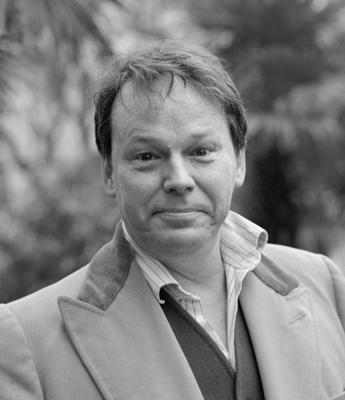
David Graeber
David Graeber was an anthropologist, historian and political thinker who spent much of his career exploring how people organise themselves without rigid hierarchies. He was fascinated by cooperation, mutual aid and the remarkable creativity that emerges when people are trusted to learn together.
Graeber's ideas resonated with me in a world of gurus and celebrity teachers, for he challenged the notion that wisdom only flows from the teacher downwards.
I first stumbled across his ideas during the occupation movements in Spain around 2010. Graeber was instrumental in discovering how people could organise and engage with one another without leaders or political parties telling them what to do. His approachability, humour and empowering conversations made him a reference for collaborative ways of learning. I began playing with his ideas, encouraging students to teach others, to pass on what they knew and let a process of self-correction and cooperative learning grow organically.
Learning and Tai Chi
Graeber would likely have seen a good Tai Chi class as something like this. A small community of learners, each helping the others discover balance, coordination and understanding through shared experience, experimentation and play rather than any exclusive adherence to one individual or a disciplined style.
If Krishnamurti questioned the way we think, Graeber questioned the way we organise ourselves. My three take-a-ways from this books include:
1. The Teacher Isn't a Boss
Graeber challenged the assumption that learning happens through hierarchy, where someone (master, sifu, grandmaster, sensei, guru) at the top (the sage on the stage) knows everything, while everyone below emulates and obeys.
Graeber reminds us that isn't how human beings have always learned. For most of our history, knowledge was shared through participation, experimentation and mutual aid (the Guide at the side, or the Meddler in the middle). So for Graeber, a Tai Chi class works best when students learn, experiment, question and then help one another as the most effective way to disseminate the knowledge and skills .
The teacher may have experience, and a good teacher may convey that experience. But no teacher owns a skill. Nobody owns balance. Nobody owns relaxation. Nobody owns gravity. These are not to be earned, or distributed like a graduation certificate. They are to be unveiled, discovered and developed through interaction, and an exchange of shared practices.
2. Play First, Organise Later
Graeber was first an anthropologist. As such, he would often notice that play comes before structure. Children don't attend meetings to establish the rules of imagination. They simply start playing, and from within the play the rules will begin to emerge.
If we follow Graeber's ideas, Tai Chi can be approached the same way. Instead of obsessing over stances or foot positions and angles (each style defines this differently while function and purpose changes culturally and over time) we give ourselves permission to learn by exploring, such as - how to shift weight or how to lose and recover balance.
The important element is to allow things to emerge and to see what happens. This comes from discussion, play, experimentation and exploration. Elements that are limited if all that happens in a classroom is the copying and pasting of postures from teacher to student. (Useful at the beginning, but of limited use soon after).
3. Small Revolutions Matter
We tend to think change happens through grand gestures. Cataclysmic, seismic events. But much of human life is built from tiny revolutionary acts of cooperation and Tai Chi offers that peculiar kind of revolution.
You stop fighting gravity. You stop fighting your own body. You stop competing with everyone around you. You stop feeding the ego.
In this way he echoes the Chinese philosopher, Mencius, who argued for small everyday changes with real world consequences. In this way, you begin bridge building, by listening, by adapting, by working with forces rather than against them. It all sounds small, yet these lessons are learned in our interactions with others - through play and experimentation and exploration. And as a consequence, hopefully, we discover a new way to relate to the world around us.
Graeber's work focuses on questioning the traditional ways knowledge and skills are passed on, and then developing alternative learning models based on these cooperative and collaborative ideas.
"What if there have always been dozens of ways to learn? What if the standard model is simply the one that survived, not necessarily the one that works best?"
Books by David Graeber
- The Dawn of Everything
- Debt: The First 5,000 Years
- Bullshit Jobs
Watch: Fear of Freedom.
Next week we continue with another unexpected writer....
Read Part 1 in this series: Observe the Observer: The Art of Teaching without Teaching
Comments ()