
Who are your go-to teachers for Tai Chi?
If you want to learn the mechanics of Tai Chi, you need a "How To" source - either local or online. But what if you need something beyond the geometry, beyond the compass directions or weight percentages that Tai Chi instructors tend to obsesses, define themselves by and then fight over?
Where do you go to discover the why, not the what?
It may surprise you to learn, that my favourite sources of inspiration have never practised the art of Tai Chi at all.
Four of these teachers - those who taught the art of doing without teachers, are going to be introduced in this new short series. Starting, today we begin with Jiddu Krishnamurti (1895–1986) and his simple observations on the observer.
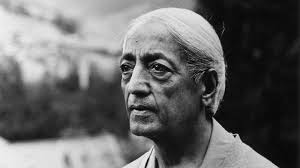
Jiddu Krishnamurti
He was a philosopher, speaker, and professional destroyer of other people's certainty. Discovered as a boy on a beach in India and groomed by the Theosophical Society to become a kind of world teacher, he responded by dismantling the entire project, declaring that "truth is a pathless land" and encouraging people to think for themselves rather than follow gurus, religions, ideologies, or anyone claiming to have all the answers. For over sixty years he travelled the world asking awkward questions about fear, conditioning, authority, and why human beings seem determined to make life more complicated than it needs to be. While most spiritual teachers are selling maps, Krishnamurti's would quietly set fire to these maps and ask you why you weren't looking at the landscape.
For Tai Chi practitioners, his work offers a useful reminder that no amount of forms, certificates or lineage charts can replace direct observation. He would probably have suggested that before worrying about "doing Tai Chi correctly", we first learn how to observe our own minds, habits and reactions without judgement.
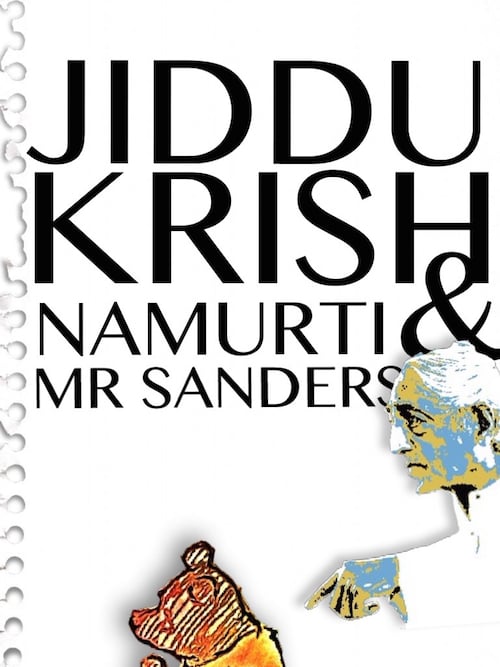
I first stumbled across Jiddu back in the 1970s. My childhood hero of the time, Bruce Lee, referred to his books when talking about his problem of teaching a "style that had no style".
Intrigued I sought out these books, of which I still retain a tatty few, with loose, yellowed pages, scribbled annotations and turned over corners. I was inspired by these, particularly his Q&A sessions, that inspired me to write one of my first introductions - the 50 Questions on Tai Chi book.
Here are 3 takeaways from my reading of Krishnamurti that you may find intriguing. Discover more on Krishnamurti - his other books and a short documentary - at the end of this post.
1. Don't Become a Follower
The moment you call someone a "master" and yourself a student, something dangerous has already happened. You have accepted authority in a field where authority cannot help you.
The teacher may show you a movement. She may point out an error. But if you merely imitate her, you become a second-hand version of another human being.
Krishnamurti asks:
- Can you watch the movement of your arm without comparing it to anyone else's?
- Can you observe your balance without judgement, without saying "good" or "bad"?
In that observation there is learning.
Not tomorrow.
Not gradually.
But now.
2. The Question Is More Important Than the Form
Most beginners ask: "Am I doing this correctly?"
But perhaps the wrong question is being asked.
- What is the body doing when it is not trying to achieve?
- What happens when movement is free of ambition?
- Why does the mind constantly compare itself with others?
Tai Chi is not just a sequence of postures, for in between these moves, there is an opportunity to discover how deeply conditioned we are by success, failure, imitation and effort. Check out the numbers that drop out of Tai Chi before reaching the end of a Form. Do we place too much emphasis on "achieving"?
Krishnamurti would say that if you learn the form but never question these aspects, you have missed the essence of the thing itself.
3. Attention Is the Real Practice
When learning Tai Chi, people speak of energy, breathing and ancient wisdom.
Perhaps all that comes later.
Krishnamurti would ask something more simple and direct;
- Can you simply stand?
- Can you feel the pressure of your feet on the ground?
- Can you notice the endless chatter of thought trying to interfere?
Not suppress it.
Not control it.
Simply see it.
The seeing is the action.
And from that attention, movement flowers naturally.
Discover Krishnamurti:
Krishnamurti often reccomends spontaneous insight over course structures or meditations. Consequently, he can appear as an all-seeing, but out of touch anti-guru, as I portrayed him in the time-travel novel One Last Thing.
In the book he appears unexpectedly - usually whenever he is not wanted, to give uncalled for advice to a series of martial artists and philosophers. In the promo video below, he shares a pizza with Colt (Chuck Norris) and engages in a conversation about his unquenchable desire to become "the best".
Books
Read about One Last Thing - the book here
His other best know book: The First and Last Freedom.
Documentary:The Reluctant Messiah
https://share.google/BEvA8k5dhk2ZTPrEY
Who are your go-to teachers for why you practice Tai Chi?
Before I reveal the next guest anti-teacher, let me know in the comments below.
Comments ()